Formative Assessment Ideas for Digital Classrooms: Quick Checks That Reduce Exam Stress

Remote and hybrid teaching have changed the rhythm of the school day, but they have not changed the core challenge: knowing what students actually understand while they are still learning. In a physical classroom, a teacher can read the room. In a digital space, that same instinct needs a different set of tools. Formative assessment ideas for digital classrooms are not about adding more tests. They are about creating quick, low-pressure moments where students show their thinking and teachers get the feedback they need to adjust instruction in time.
When teachers use short, purposeful checks during a lesson rather than waiting for a unit exam, students feel less anxious and learn more consistently. This approach works especially well in edukacja zdalna settings, where the lack of face-to-face cues can make it harder to tell who is confused and who is ready to move on.
Why Quick Checks Work Better Than Frequent Exams
Traditional exams tend to measure recall after the fact. Formative checks happen while learning is still in progress. That timing makes all the difference. A student who misunderstands a concept on Tuesday can be redirected on Wednesday. A student who struggles on a midterm in November may have already fallen weeks behind without anyone noticing.
Quick checks also lower the emotional stakes. Many students, especially younger learners and those new to online environments, experience real anxiety around formal assessments. Short, informal tasks feel more like part of the lesson than a judgment. That shift in tone helps students take intellectual risks, ask questions, and engage more openly.
From a practical standpoint, quick checks give teachers actionable data without hours of grading. A two-minute exit ticket can reveal more about a lesson’s effectiveness than a forty-question quiz the following week.
Seven Low-Stakes Methods That Work Online
1. One-Minute Papers at the End of a Lesson
Ask students to write one or two sentences answering a focused question: What was the most important idea today? What remains unclear? In a live session, students can type into a chat or a shared document. In asynchronous settings, a simple form works well. The teacher scans responses and adjusts the next lesson accordingly.
2. Thumbs Up, Thumbs Down, Thumbs Sideways
This classic method translates easily to video calls. Students signal their confidence level with a quick gesture or by selecting an emoji in chat. It is fast, visual, and gives the teacher an instant snapshot of the group. For quieter students who may not speak up, it is a low-barrier way to participate.
3. Digital Exit Tickets
At the end of a class, post a short prompt in the learning management system or a shared slide. Prompts might ask students to name one thing they learned, one question they still have, or to rate their confidence on a scale of one to five. Over time, patterns in exit ticket responses help teachers identify which topics need revisiting and which students may need individual support.
4. Think-Pair-Share in Breakout Rooms
In live online classes, breakout rooms recreate the think-pair-share structure. Students reflect individually, discuss with a partner, and then share key points with the whole group. The teacher circulates between rooms, listening for misconceptions. This method combines social interaction with real-time formative feedback.
5. Quick Polls and Multiple-Choice Questions
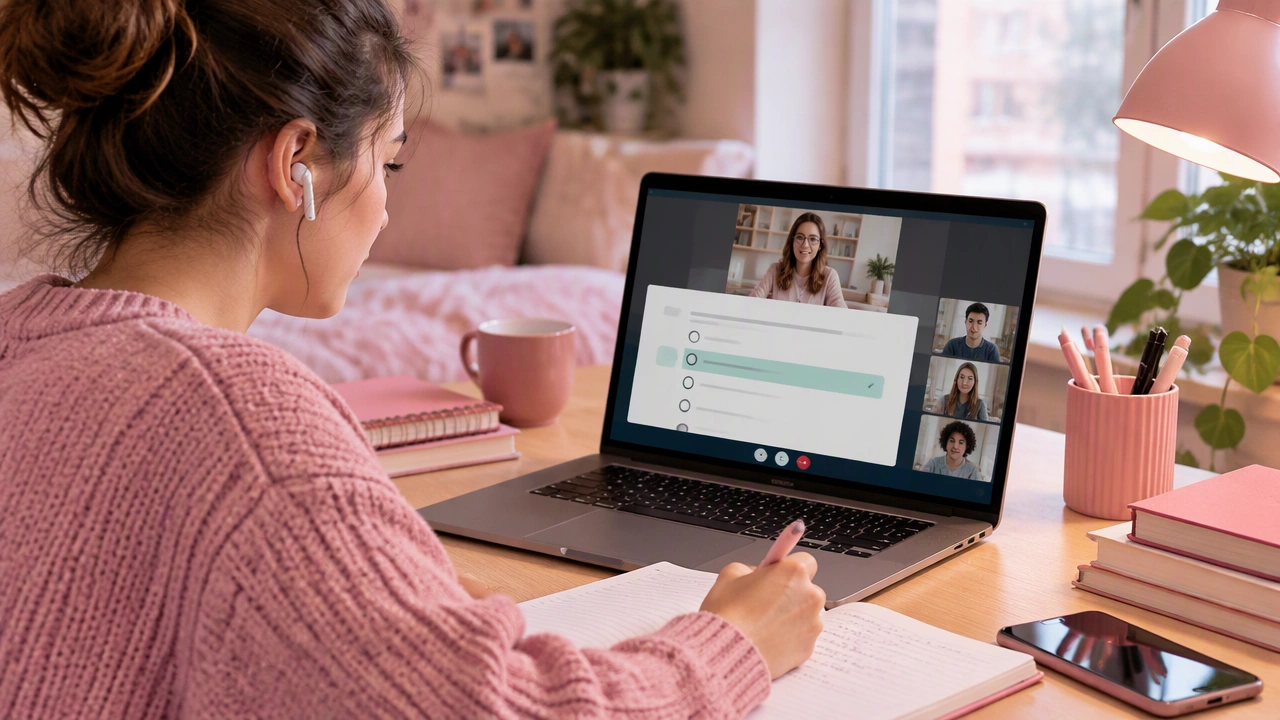
Embedding a short poll or a two-to-three question quiz in the middle of a lesson keeps students engaged and gives the teacher immediate data. Many platforms support anonymous responses, which encourages honesty. The goal is not to grade but to check whether the class is ready to move forward or needs another example.
6. Visual Show-Your-Work Tasks
Ask students to solve a problem, sketch a concept map, or annotate a diagram and share their screen or upload a photo. Seeing the process, not just the final answer, reveals where understanding breaks down. This works particularly well in subjects like math, science, and design, but it can be adapted to humanities through concept mapping or timeline creation.
7. Self-Assessment Checklists
Give students a short checklist of skills or concepts covered in the lesson. They rate themselves honestly: confident, somewhat confident, or not yet confident. This builds metacognitive awareness and gives the teacher a class-wide view of perceived readiness. Over time, students begin to track their own growth, which supports independent learning habits.
Designing Checks That Actually Give You Useful Feedback
The effectiveness of any formative assessment depends on how it is designed. A vague prompt like “Did you understand?” rarely produces useful information. Specific prompts yield specific data. Instead of asking whether students understood the lesson, ask them to explain a key concept in their own words or to identify a common mistake related to the topic.
It also helps to vary the format. Some students express themselves better in writing; others prefer visual or verbal responses. Mixing methods across a week ensures that more students have a chance to demonstrate understanding in a way that feels natural to them.
Timing matters too. Checks placed at the beginning of a lesson reveal prior knowledge. Checks in the middle catch confusion before it solidifies. Checks at the end measure what stuck. Each position serves a different instructional purpose.
Building a Routine Around Quick Checks
Formative assessment works best when it is consistent. If students know that every lesson ends with a short exit ticket, they come to expect it and prepare mentally. The habit reduces resistance and increases the quality of responses over time.
Teachers can also close the loop by sharing what they learned from the checks. A brief statement like “Many of you found the second example confusing, so we will spend more time on that tomorrow” shows students that their feedback matters. That sense of being heard strengthens engagement and trust, both of which are harder to build in remote settings.
For teams of teachers, comparing formative data across classes can reveal broader patterns. If students in multiple sections struggle with the same concept, the issue may be in how the topic is being introduced rather than in individual student effort.
Moving Away From Stress-Heavy Assessment Culture
Not every moment of learning needs to carry a grade. When teachers replace some high-stakes testing with regular, low-pressure checks, students focus more on understanding and less on performance. That shift benefits everyone: teachers get better information, students feel safer taking risks, and the classroom culture becomes more collaborative.
In digital and remote environments, where isolation and screen fatigue are real concerns, formative assessment also serves a relational purpose. It keeps students connected to the teacher and to each other. A quick poll, a partner discussion, or a shared reflection reminds students that someone is paying attention to their learning, even through a screen.
The tools are simple. The impact is significant. Start with one or two methods, build them into your routine, and let the feedback shape your teaching. That is the essence of responsive instruction, and it works just as well online as it does in any classroom.